
Asheville People Directory Map
Asheville people directories do not form one master list. The most useful source depends on the tie being tested. A school directory confirms a current work contact. A parcel roll names the assessed owner, while a deed index records parties to a land instrument. Historic city directories can place a resident at an address in a given publication year. Community archives preserve names and stories that government files may never contain.
| Asheville directory | People represented | Source keeper | How to search |
|---|---|---|---|
| Asheville City Schools | Current district staff | City school district | Free name and keyword search |
| UNC Asheville | Faculty, staff, departments, and nonrestricted entries | University | Free search or department browse |
| Government contacts | City leaders, department contacts, and state employees | City and state | Free department pages and state search |
| Property and deed indexes | Assessed owners, grantors, and grantees | Buncombe County | Free web tools plus office access |
| Business and license tools | Agents, company officials, members, and licensees | State agencies, boards, and Chamber | Public web searches vary by keeper |
| Asheville city directories | Past residents, spouses, occupations, firms, and addresses | DigitalNC and Buncombe County Special Collections | Digitized issues, catalog, and library help |
| Cemetery resources | Interments, cemetery names, and parcel context | City and county GIS | Map tools and appointment fallback |
Start with the directory closest to the known fact. A teacher’s name fits the school search; an old street address fits a reverse directory; a parcel fits the county property search. A business name belongs in state registration records before a person-name search. No entry proves more than its source says. An owner mailing address may be offsite, and a deed party may have moved long ago.
Asheville Education Directory Searches
The Asheville City Schools directory is a current contact tool. The inspected interface returned 664 constituents over 17 result pages, with 40 entries per page. It accepts a broad keyword or separate first and last names. Results show a person and school or location; a detail view may add title, department, and official email. It is not an archive of former personnel.
| Search field | Input | Required | How it narrows results |
|---|---|---|---|
| Keyword | Text | No | Matches a staff, school, or title term |
| First Name | Text | No | Limits the current district list by given name |
| Last Name | Text | No | Limits the current district list by surname |
The UNC Asheville directory uses Search and Departments tabs. Its single search box accepts a name, title, or email term. One inspected faculty entry for Katherine C. Zubko showed academic credentials, three leadership or teaching roles, university email, campus phone, and a Zageir Hall office. Students may restrict directory information, so no result is not proof that a person lacks a university tie.
- Name and credentials: displayed on a full faculty profile when supplied.
- Roles: one or more university titles and academic units.
- Contact: institutional email and campus telephone.
- Place: campus building and room, when published.
- Limits: restricted student data and entries awaiting staff updates may not appear.
Asheville Government Contact Directories
Local government uses a decentralized directory model. The City of Asheville departments directory lists offices, duties, general phone or email channels, and often named leaders. Council, board, and commission rosters add elected or appointed names. Buncombe County pages also emphasize offices and contact routes rather than a verified countywide surname index. This city directory capture shows how those links are grouped when the public function is known but the contact’s name is not.
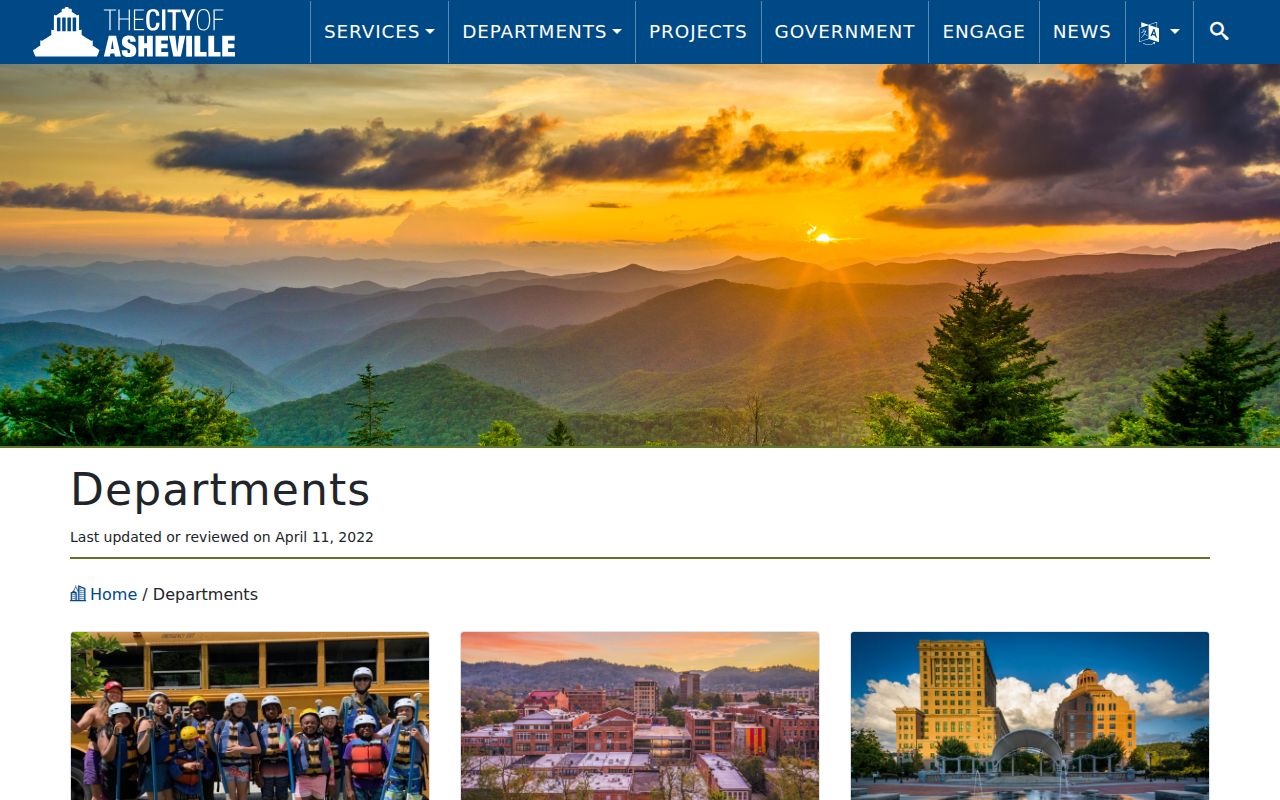
That structure makes a department main line the sound fallback when a named employee is absent. For city-created material, the Asheville records request service accepts a focused request by department, people named, subject or address, and date span. The broader access rules and copy channels are covered with Asheville public records. For state agencies, the North Carolina employee directory provides a separate statewide contact search. This state directory capture shows the official telephone interface.
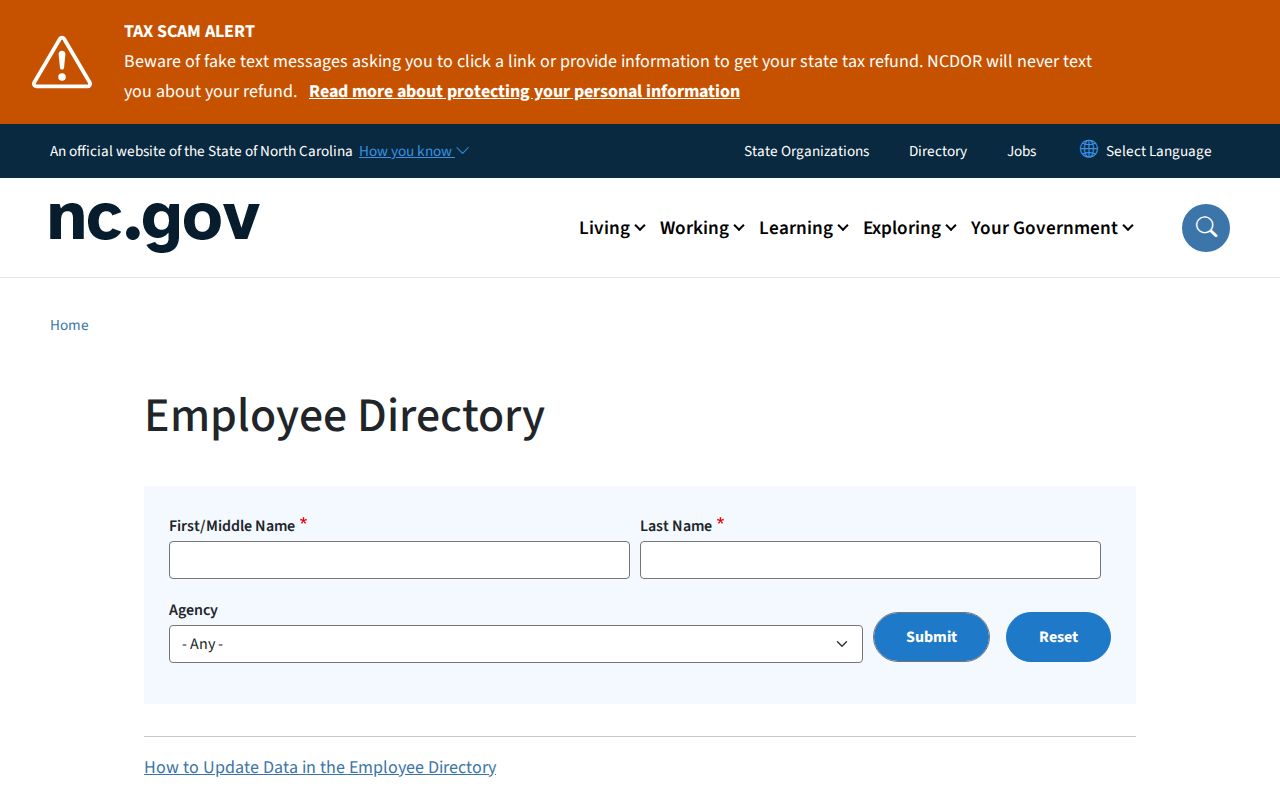
Use the state tool when the role belongs to North Carolina government. Use the city or county department route for local work. These directory layers are not interchangeable.
Note: A department page may identify leadership without listing every employee, so call the published office channel before drawing a negative conclusion.
Asheville Owner Name Directories
Three Buncombe systems act like people directories, but each represents a different fact. The Property Record Search accepts an owner name, property address, or parcel identifier. A parcel card commonly shows assessed owner, mailing and physical addresses, the 15-digit PIN, legal-description context, value, acreage, tax jurisdiction, and a deed reference. “Situs” means the parcel’s physical location. The mailing address is where tax correspondence goes and may point to a trust, agent, business, or an old destination.
The Register of Deeds name index lists grantors and grantees, which are the parties giving and receiving an interest. It also carries document type, recording date, and book/page or another instrument identifier. The Consolidated Real Property index covers 1995 to the present, while older books and selected images reach much earlier. County holdings date to the late 1700s, but that does not mean every early volume has one seamless online name index.
If the web tools fail, the Register of Deeds has a public search room at 205 College Street, open weekdays from 8 a.m. to 5 p.m. The office also handles copies by mail with its form, check or money order, and a self-addressed stamped envelope. Buncombe Tax and Land Records can help with archived cards, tax scrolls, and PIN changes. Search owners by address first, then take the name into the deed directory.
Asheville Business Directory Layers
The North Carolina Business Registration Search is the official entity directory. Its controls include a Search For choice, search type, words, organization name, and person-name fields. Results can identify the legal name, SOSID, status, formation date and state, registered agent, office or mailing addresses, company officials, and filings. Buncombe assumed-name instruments supply a second trail through the deed index, with parties, business name, filing details, and book/page references.
Professional searches are split among boards. The state licenses and permits directory helps identify the right regulator, while board verification tools may publish a license number, status, location, dates, and discipline. A discovery listing is not the same as a board’s current verification record.
The Asheville Area Chamber is the strongest current cross-industry member directory found in the research. It lists more than 1,600 businesses, organizations, and coalitions. Basic search uses Keyword and Category. Advanced controls include organization, city, state, ZIP, website, and phone. The Chamber’s 2025 directory markers can also indicate leadership or ownership categories, long membership, and awards. These are member facts, not state registration or license findings.
Asheville Directories Since 1883
Digitized Asheville people directories begin with 1883–84 in the collection located during research. DigitalNC exposes 57 issues through 1963. The run includes 1887, 1890, 1896, 1899–1900, many annual or combined issues from the early 1900s, 1922 through 1932, annual issues from 1935 through 1945, and later volumes including 1945–46, 1948–49, 1950, 1951, and every year from 1953 through 1963. Those are digitized endpoints, not proof of the first or last directory ever printed.
Publishers and titles changed. Names include Davison/Baughman Brothers, Henry W. Fulenwider, Commercial Service, Miller’s, Hill, and Maloney’s. A city directory entry can give a resident’s name, street address, occupation, spouse or widow notation, business, and movement from one year to another. Search spelling variants and initials. Optical character recognition can misread old type, so check the page image.
| Directory period | Verified Asheville coverage | Useful detail | Access route |
|---|---|---|---|
| Earliest digitized issues | 1883–84, 1887, 1890, 1896 | Names, addresses, occupations, firms | DigitalNC scans |
| Turn of the century | 1899–1900 through early 1900s issues | Households and yearly movement | DigitalNC and library catalog |
| Interwar and postwar | Broad coverage through 1963, with gaps | Householders, businesses, phone data where printed | Digitized issues and Special Collections |
| Physical and archival holdings | Exact volume runs require confirmation | Directories, newspapers, maps, manuscripts, and genealogy | Buncombe County Special Collections staff |
The Buncombe County Special Collections portal and NC Cardinal catalog are the main access points beyond scans. Staff at Pack Memorial Library can check physical volumes and uncataloged boxes. The Virtual Library also lists Ancestry Library Edition, the Asheville Citizen Times archive from 1999 to the present, NC LIVE, and business-residential directory data. Authentication and in-library access rules vary. No current carrier white-pages directory was verified.
- City directory
- A publication arranged by resident or business name, often with an address and occupation.
- Reverse directory
- A street-first list that helps identify who was linked to a numbered address.
- Numerical telephone section
- A list ordered by phone number rather than by surname.
- Issue year
- The publication date, which is a snapshot and may lag a move or death.
Asheville’s 1960 Reverse Directory
The 1960 Hill volume confirms a “Directory of Householders, Including Street and Avenue Guide.” Streets appear alphabetically, numbered addresses run in order, and the householder or business sits opposite the address. The volume can include intersections, an owner-occupied notation, and telephone information. It also has a separate numerical telephone directory. Do not assume every Asheville volume has those reverse features.
The 1887 directory helps decode a much older address system based on Public Square, Main, Patton, and College. Street names changed too. Today’s Biltmore Avenue and Broadway were South Main and North Main until 1914, and historical sources may call Broadway either a street or an avenue. A sound directory search tests the old Main names and both Broadway suffixes before deciding the address is absent.
- Confirm the present address and jurisdiction in city or county GIS, then record the parcel PIN.
- Check whether the road or structure appears in the available 1951, 1963, or 1975 historic aerial view.
- Open the matching annual directory and use its street section if that issue has one.
- Compare the named occupant with tax scrolls and deeds, keeping ownership distinct from residence.
- Repeat with prior street names, house numbers, and parcel history when the trail breaks.
Note: An Asheville postal address can fall outside city limits, so directory coverage and the office holding a related record may not share one boundary.
Riverside in Asheville Directories
Riverside Cemetery adds a rare name-and-place layer to Asheville people directories. Founded in 1885 and acquired by the city in 1952, Riverside has more than 14,000 burials and 10,000 monuments in city history sources. Its maps and records draw on interment registers, plot maps, marker photographs, and archival fragments. A marker date and an interment date can differ, so each field should be read by source.
The cemetery offers historical and genealogy appointments at 53 Birch Street and (828) 259-5800. Posted hours are daily from 7 a.m. to 6 p.m. Buncombe County Cemetery Finder searches cemetery name, address, or road and may return an alternate name, a linked memorial source, landowner, deed, and mailing context. Cemeteries on private land require landowner permission before a visit.
This trail works best with other Asheville directories. A city directory supplies an address or spouse. A newspaper may add an obituary. Cemetery data can then anchor a burial place, while deeds and estates help test family and land ties.
Asheville Directories After Helene
Some people and groups appear in community archives rather than formal directories. Buncombe County Special Collections works with collections tied to Black Asheville, West Asheville, LGBTQIA+ history, families, businesses, and local organizations. Ramsey Library at UNC Asheville also holds institutional and special collections, including records of the Asheville-founded Carolina Mountain Club.
The Come Hell or High Water project began in January 2025 to preserve community records of Tropical Storm Helene. By December, Special Collections reported 1,033 contributed items from at least 257 people and 7,877 web users in the United States. Oral histories, photographs, organization files, letters, and other donated sources can reveal personal links that never entered an official roster.
Access starts with the Special Collections portal, its finding aids, and staff. The State Archives county-record collections provide another fallback for originals and microfilm. Early gaps are real: courthouse fires in 1830 and 1865 destroyed many Buncombe court records. When one file is gone, combine directories, deeds, taxes, newspapers, cemetery sources, and later estate papers instead of treating the missing record as a dead end.